
Tupolev Tu-16
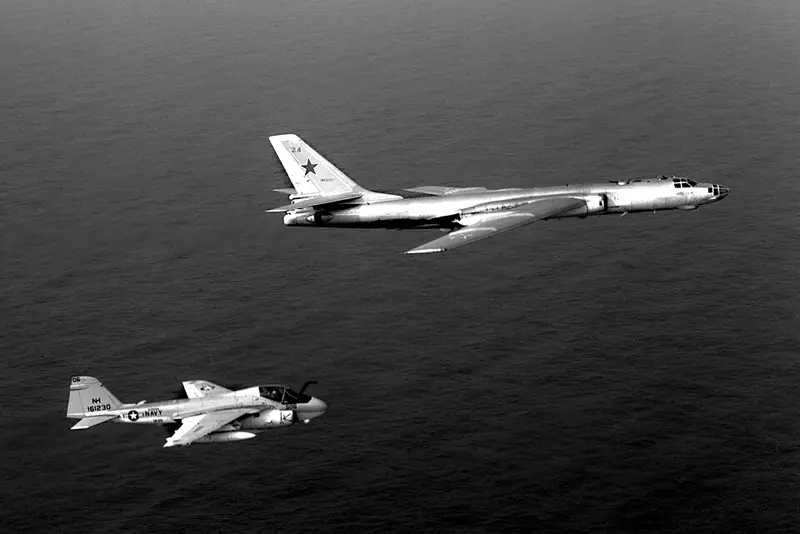
The Tupolev Tu-16, NATO reporting name Badger, first flew on 27 April 1952 and entered service in 1954 as the Soviet Union's front-line jet strategic bomber, replacing the piston-engined Tu-4. Its two huge Mikulin AM-3 turbojets are buried in the wing roots, leaving a long bomb bay that could swallow a single 9-tonne FAB-9000 bomb or a nuclear warhead; in 1955, a Tu-16 dropped the Soviet first thermonuclear device over Semipalatinsk. Some 1,507 were built between 1954 and 1962, and the design outlived its creators: Chinese-licensed H-6 variants remained in service as of 2020, while the Tu-16's airframe gave rise to the Tu-104 airliner.

Did you know?
The Badger's two huge turbojets sit buried in the wing roots, leaving a long bomb bay in the fuselage.
Specifications
| Length | 34.8 m (114 ft) |
|---|---|
| Wingspan | 33 m (108 ft) |
| Height | 10.4 m (34 ft) |
| Persons on board | 7 |
| Crew | 6 |
| Maximum take-off weight | 79 t |
| Range | 3,500 NM (6,482 km) |
| Maximum speed | 540 kt (1,000 km/h) |
| Service ceiling | 40,350 ft (12,299 m) |
| Fuel capacity | 36,000 l |
| Engines | 2x Mikulin AM-3M |
Curated by CatchFlights from manufacturer documents, ICAO Doc 8643 and reference works; values are left out where no source could confirm them. Sources are listed on our credits page.
In CatchFlights
In CatchFlights the Tupolev Tu-16 starts as a Legendary catch. The tier is an editorial judgement of how special a sighting of this type is. The more often you catch it, the closer it moves to Common for you. The first catch of a legendary type pays a bonus of its own.
A catch counts for the manufacturer Tupolev, the Tu-16 family and the model in your collection, and the daily Type Rating quiz asks about the types of each family.
Catch it yourself.CatchFlights shows the aircraft flying near you on a radar, so a type like this one is only a catch away when it passes overhead. Explore CatchFlights.
Browse all aircraft types, or learn to tell Airbus from Boeing.