
Taylorcraft (2) Auster 4
The Auster IV, Taylorcraft's Model G, enlarged the wartime Auster's cabin to seat three rather than two and reverted to an American 130 hp Lycoming O-290 engine once supply improved later in the war. That extra capacity and power made it a more capable air observation post aircraft than the earlier Model E, able to carry an artillery observer and additional equipment on liaison and reconnaissance sorties. It formed a direct stepping stone to the definitive wartime Auster V, which added blind-flying instruments and flap modifications to essentially the same Model G airframe, before postwar Auster tourers took the family in a civilian direction.
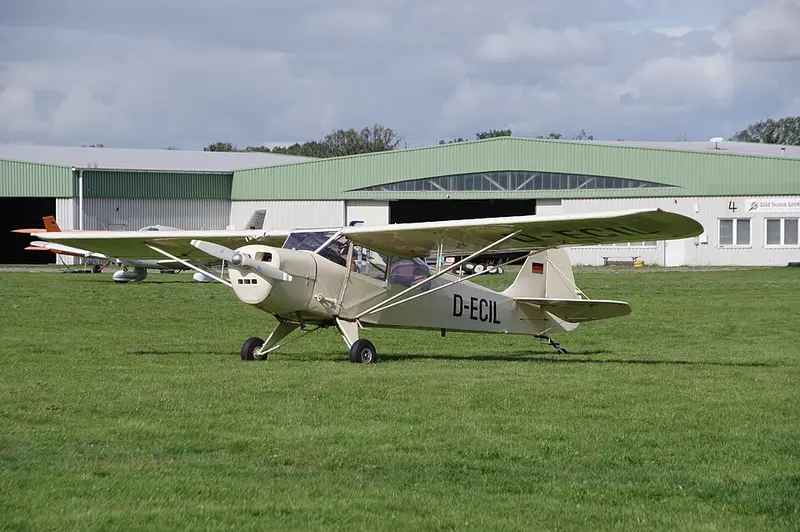
_2022-09-17_Andre_Gerwing_Collection_ID_016702.jpg)
Did you know?
The Auster 4 widened the wartime Auster cabin to three seats and, once supplies improved, brought the Lycoming engine back as the stepping stone to the Auster V.
Specifications
| Length | 6.8 m (22 ft) |
|---|---|
| Wingspan | 11 m (36 ft) |
| Height | 2.4 m (8 ft) |
| Persons on board | 3 |
| Maximum take-off weight | 0.9 t |
| Range | 250 NM (463 km) |
| Stall speed | 28 kt (52 km/h) |
| Service ceiling | 14,000 ft (4,267 m) |
| Optimum ceiling | 10,000 ft (3,048 m) |
| Units built | 254 |
Curated by CatchFlights from manufacturer documents, ICAO Doc 8643 and reference works; values are left out where no source could confirm them. Sources are listed on our credits page.
In CatchFlights
In CatchFlights the Taylorcraft (2) Auster 4 starts as a Rare catch. The tier is an editorial judgement of how special a sighting of this type is. The more often you catch it, the closer it moves to Common for you.
A catch counts for the manufacturer Taylorcraft (2), the Auster 4 family and the model in your collection, and the daily Type Rating quiz asks about the types of each family.
Catch it yourself.CatchFlights shows the aircraft flying near you on a radar, so a type like this one is only a catch away when it passes overhead. Explore CatchFlights.
Browse all aircraft types, or learn to tell Airbus from Boeing.