
Short SC-5 Belfast
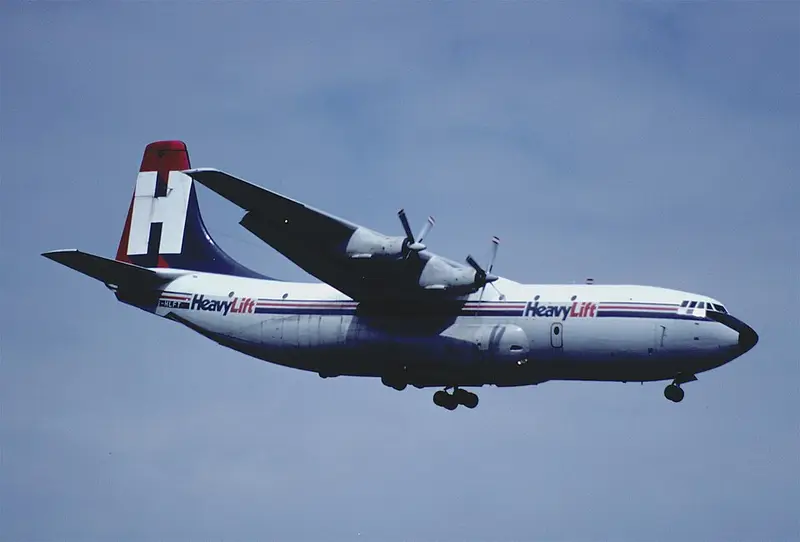
The Short Belfast was Britain’s largest military transport aircraft when it entered service in the 1960s. Its enormous box-like fuselage and rear loading ramp were designed to carry heavy military vehicles, while its high wing kept the cargo bay unobstructed. Only ten were built, and the Royal Air Force retired them after a relatively short career in favour of the C-130 and C-5. One Belfast later returned to civilian heavy-lift work, preserving an aircraft type that is now exceptionally rare.
.jpg)
Did you know?
Only ten Short Belfasts were built, making it one of the rarest large military transports, recognisable by its boxy, high-winged cargo fuselage.
Specifications
| Length | 41.6 m (136 ft) |
|---|---|
| Wingspan | 48.4 m (159 ft) |
| Height | 14.3 m (47 ft) |
| Crew | 5 |
| Maximum take-off weight | 104.3 t |
| Range | 3,300 NM (6,112 km) |
| Maximum speed | 315 kt (583 km/h) |
| Service ceiling | 35,000 ft (10,668 m) |
| Optimum ceiling | 25,000 ft (7,620 m) |
| Rate of climb | 1,000 ft/min (5.1 m/s) |
| Take-off distance | 1,768 m (5,801 ft) |
| Fuel capacity | 45,870 l |
| Engines | 4x Rolls-Royce Tyne R.Ty.12 |
| Units built | 10 |
Curated by CatchFlights from manufacturer documents, ICAO Doc 8643 and reference works; values are left out where no source could confirm them. Sources are listed on our credits page.
In CatchFlights
In CatchFlights the Short SC-5 Belfast starts as a Legendary catch. The tier is an editorial judgement of how special a sighting of this type is. The more often you catch it, the closer it moves to Common for you. The first catch of a legendary type pays a bonus of its own.
A catch counts for the manufacturer Short, the SC-5 Belfast family and the model in your collection, and the daily Type Rating quiz asks about the types of each family.
Catch it yourself.CatchFlights shows the aircraft flying near you on a radar, so a type like this one is only a catch away when it passes overhead. Explore CatchFlights.
Browse all aircraft types, or learn to tell Airbus from Boeing.