
Pitcairn-Cierva PCA-2
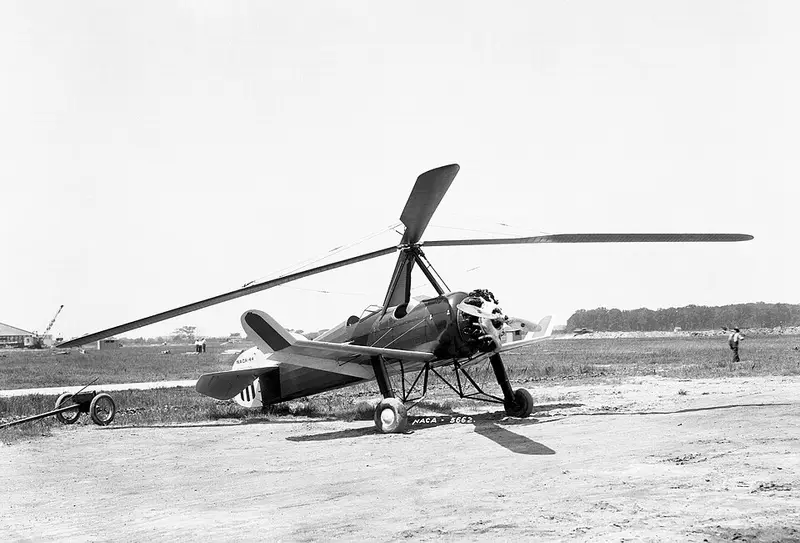
The Pitcairn PCA-2 was an early American autogyro, using an unpowered rotor for lift and a propeller for forward motion. Unlike a helicopter, its rotor spins by airflow during flight, making the aircraft mechanically simpler but unable to hover. The PCA-2 became famous when Amelia Earhart set an autogyro altitude record in one in 1931. Its exposed framework and large rotor make it a striking relic of the era when autogyros briefly competed with conventional light aircraft.

Did you know?
The PCA-2 became the first rotary-wing aircraft to earn a U.S. type certificate, in April 1931 — more than a decade before helicopters were certified.
Specifications
| Length | 7.2 m (23 ft) |
|---|---|
| Height | 3.1 m (10 ft) |
| Rotor diameter | 13.7 m (45 ft) |
| Maximum passengers | 2 |
| Crew | 1 |
| Maximum take-off weight | 1.3 t |
| Range | 320 NM (593 km) |
| Maximum speed | 100 kt (185 km/h) |
| Service ceiling | 18,000 ft (5,486 m) |
| Optimum ceiling | 6,000 ft (1,829 m) |
| Rate of climb | 800 ft/min (4.1 m/s) |
| Engines | 1x Wright R-975 |
Curated by CatchFlights from manufacturer documents, ICAO Doc 8643 and reference works; values are left out where no source could confirm them. Sources are listed on our credits page.
In CatchFlights
In CatchFlights the Pitcairn-Cierva PCA-2 starts as a Legendary catch. The tier is an editorial judgement of how special a sighting of this type is. The more often you catch it, the closer it moves to Common for you. The first catch of a legendary type pays a bonus of its own.
A catch counts for the manufacturer Pitcairn-Cierva, the PCA-2 family and the model in your collection, and the daily Type Rating quiz asks about the types of each family.
Catch it yourself.CatchFlights shows the aircraft flying near you on a radar, so a type like this one is only a catch away when it passes overhead. Explore CatchFlights.
Browse all aircraft types, or learn to tell Airbus from Boeing.