
Mitsubishi A6M Zero
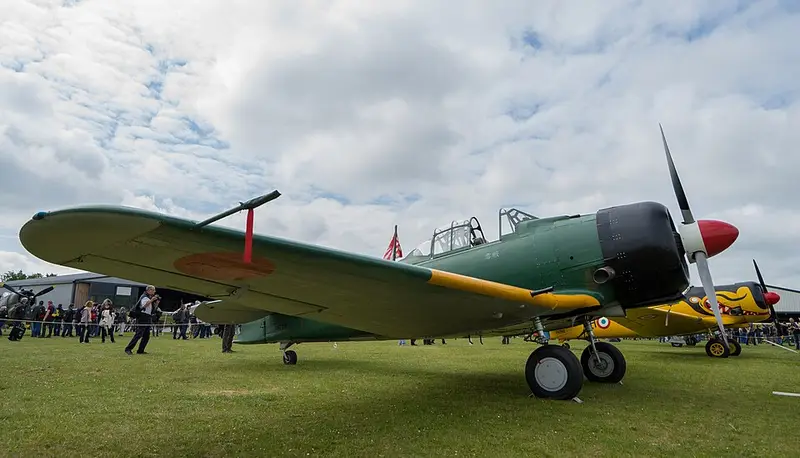
The Mitsubishi A6M Zero dominated the early Pacific War, combining exceptional agility and unusually long range for a carrier fighter, achieved partly by deliberately sacrificing armour and self-sealing fuel tanks that heavier Allied fighters carried. That lightness gave it an agility advantage Allied pilots initially struggled badly to counter, until new tactics emphasising diving attacks and teamwork, rather than turning dogfights, were developed specifically to neutralise its manoeuvrability edge. Its long range let it escort bombers far beyond what contemporary Allied carrier fighters could manage, extending Japan's early-war strike reach considerably. As the war progressed, its lack of armour and self-sealing tanks became a serious liability against increasingly capable, better-protected Allied fighters.
.jpg)
Did you know?
The Zero's exceptional agility and long range came from deliberately sacrificing armour and self-sealing fuel tanks that heavier Allied fighters carried.
Specifications
| Length | 9.1 m (30 ft) |
|---|---|
| Wingspan | 12 m (39 ft) |
| Height | 3.1 m (10 ft) |
| Crew | 1 |
| Range | 1,010 NM (1,871 km) |
| Maximum speed | 288 kt (533 km/h) |
| Service ceiling | 33,000 ft (10,058 m) |
| Rate of climb | 3,091 ft/min (15.7 m/s) |
| Engines | 1x Nakajima Sakae (radial) |
| Units built | 10,939 |
Curated by CatchFlights from manufacturer documents, ICAO Doc 8643 and reference works; values are left out where no source could confirm them. Sources are listed on our credits page.
In CatchFlights
In CatchFlights the Mitsubishi A6M Zero starts as a Legendary catch. The tier is an editorial judgement of how special a sighting of this type is. The more often you catch it, the closer it moves to Common for you. The first catch of a legendary type pays a bonus of its own.
A catch counts for the manufacturer Mitsubishi, the A6M Zero family and the model in your collection, and the daily Type Rating quiz asks about the types of each family.
Catch it yourself.CatchFlights shows the aircraft flying near you on a radar, so a type like this one is only a catch away when it passes overhead. Explore CatchFlights.
Browse all aircraft types, or learn to tell Airbus from Boeing.