
Douglas DC-7
The Douglas DC-7 was the fastest and final piston-engine airliner Douglas built, developed specifically to be capable of non-stop coast-to-coast US flights against strong headwinds — a route earlier piston airliners often couldn't manage without a fuel stop. Its more powerful engines gave it a real speed advantage over rivals, but also proved notoriously troublesome to maintain reliably. It arrived just before jet airliners rendered the entire piston-engine airliner category obsolete within a few short years. Its brief reign at the top of piston-airliner performance makes it something of a high-water mark for propeller-driven passenger flight.
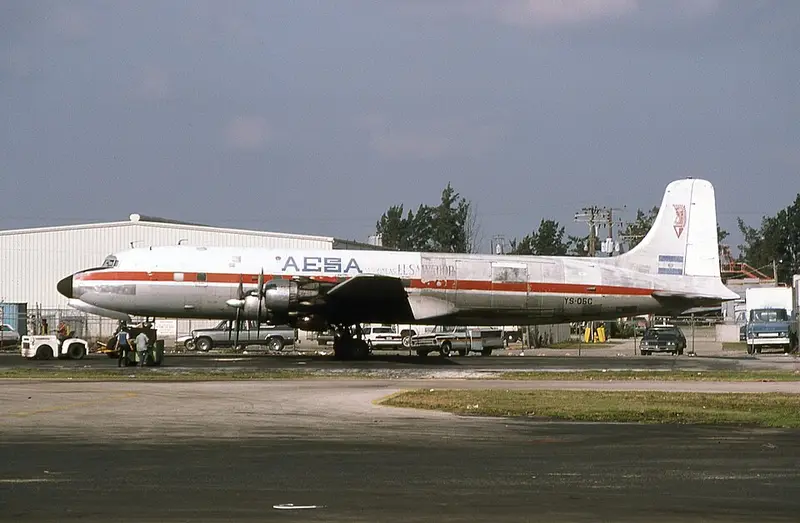
.jpg)
Did you know?
The DC-7 was Douglas's fastest and final piston airliner, built specifically to fly coast-to-coast non-stop against headwinds just before jets made the whole category obsolete.
Specifications
| Length | 33.8 m (111 ft) |
|---|---|
| Wingspan | 38.9 m (127 ft) |
| Height | 9 m (30 ft) |
| Maximum passengers | 105 |
| Persons on board | 74-110 |
| Maximum take-off weight | 64.8 t |
| Range | 3,080 NM (5,704 km) |
| Maximum speed | 270 kt (500 km/h) |
| Stall speed | 84 kt (156 km/h) |
| Service ceiling | 21,700 ft (6,614 m) |
| Optimum ceiling | 22,000 ft (6,706 m) |
| Rate of climb | 240 ft/min (1.2 m/s) |
| Take-off distance | 1,939 m (6,362 ft) |
| Engines | 4x Wright R-3350 |
| Units built | 338 |
Curated by CatchFlights from manufacturer documents, ICAO Doc 8643 and reference works; values are left out where no source could confirm them. Sources are listed on our credits page.
In CatchFlights
In CatchFlights the Douglas DC-7 starts as a Legendary catch. The tier is an editorial judgement of how special a sighting of this type is. The more often you catch it, the closer it moves to Common for you. The first catch of a legendary type pays a bonus of its own.
A catch counts for the manufacturer Douglas, the DC-7 family and the model in your collection, and the daily Type Rating quiz asks about the types of each family.
Catch it yourself.CatchFlights shows the aircraft flying near you on a radar, so a type like this one is only a catch away when it passes overhead. Explore CatchFlights.
Browse all aircraft types, or learn to tell Airbus from Boeing.