
Basler BT-67
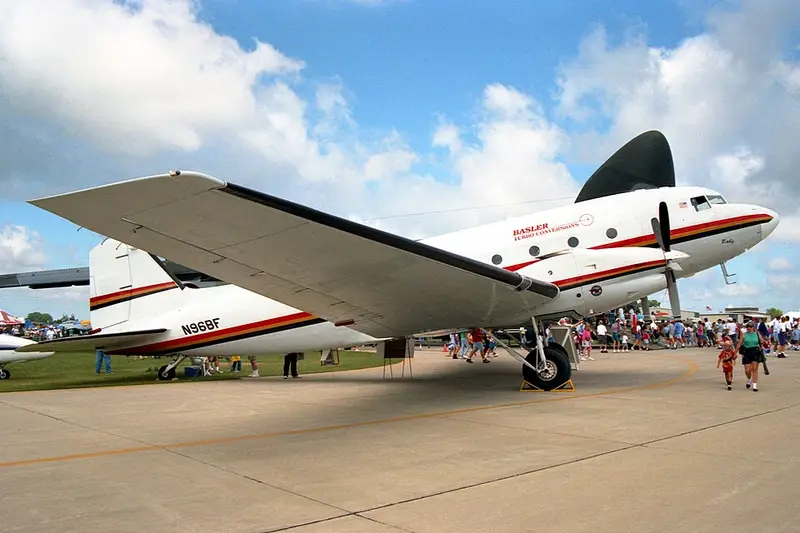
The Basler BT-67 is a comprehensive turboprop rebuild of the Douglas DC-3, with a stretched fuselage, new wing structure, and Pratt & Whitney Canada engines. It gives a 1940s airframe modern reliability for polar, cargo, and survey work. It is far more than a simple re-engine.
_1993-08-01_Andre_Gerwing_Collection_ID_027354.jpg)
Did you know?
Recognisable by its turboprop nacelles replacing the DC-3's classic round radial engines, while the fuselage shape stays unmistakably DC-3.
Specifications
| Length | 21 m (69 ft) |
|---|---|
| Wingspan | 29 m (95 ft) |
| Height | 5.2 m (17 ft) |
| Maximum passengers | 38 |
| Crew | 2 |
| Maximum take-off weight | 13 t |
| Range | 2,000 NM (3,704 km) |
| Maximum speed | 250 kt (463 km/h) |
| Service ceiling | 25,000 ft (7,620 m) |
| Optimum ceiling | 18,000 ft (5,486 m) |
| Take-off distance | 1,265 m (4,150 ft) |
| Fuel capacity | 6,000 l |
| Engines | 2x Pratt & Whitney Canada PT6A-67R |
| Units built | 70 |
Curated by CatchFlights from manufacturer documents, ICAO Doc 8643 and reference works; values are left out where no source could confirm them. Sources are listed on our credits page.
In CatchFlights
In CatchFlights the Basler BT-67 starts as a Rare catch. The tier is an editorial judgement of how special a sighting of this type is. The more often you catch it, the closer it moves to Common for you.
A catch counts for the manufacturer Basler, the BT-67 family and the model in your collection, and the daily Type Rating quiz asks about the types of each family.
Catch it yourself.CatchFlights shows the aircraft flying near you on a radar, so a type like this one is only a catch away when it passes overhead. Explore CatchFlights.
Browse all aircraft types, or learn to tell Airbus from Boeing.