
Westland WG-13 Lynx
The Westland Lynx held the world helicopter speed record for over three decades, a mark set using a specially modified aircraft with clipped rotor blade tips to push it past 400 kilometres per hour. Its rigid rotor system, unusual for a helicopter of its era, gives it exceptional agility, letting military versions perform aerobatic manoeuvres few other helicopters can safely attempt. Naval versions, fitted with folding rotors and a harpoon deck-lock system, operate from small frigate decks in rough seas across numerous navies worldwide. Its successor, the AW159 Wildcat, shares much of the same basic dynamic system while replacing most of the airframe.
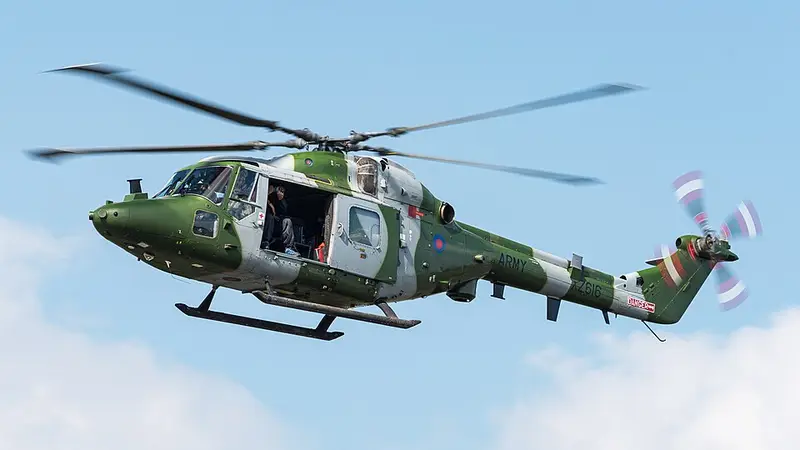

Did you know?
The Westland Lynx held the world helicopter speed record for three decades, using clipped rotor blade tips to push past 400 km/h.
Specifications
| Length | 12.1 m (40 ft) |
|---|---|
| Height | 3.5 m (11 ft) |
| Rotor diameter | 12.8 m (42 ft) |
| Maximum passengers | 10 |
| Persons on board | 11 |
| Crew | 2 |
| Maximum take-off weight | 5.3 t |
| Range | 320 NM (593 km) |
| Service ceiling | 18,500 ft (5,639 m) |
| Optimum ceiling | 8,000 ft (2,438 m) |
| Rate of climb | 730 ft/min (3.7 m/s) |
| Fuel capacity | 970 l |
| Engines | 2x Rolls-Royce Gem |
| Units built | 450 |
Curated by CatchFlights from manufacturer documents, ICAO Doc 8643 and reference works; values are left out where no source could confirm them. Sources are listed on our credits page.
In CatchFlights
In CatchFlights the Westland WG-13 Lynx starts as a Very rare catch. The tier is an editorial judgement of how special a sighting of this type is. The more often you catch it, the closer it moves to Common for you.
A catch counts for the manufacturer Westland, the WG-13 Lynx family and the model in your collection, and the daily Type Rating quiz asks about the types of each family.
Catch it yourself.CatchFlights shows the aircraft flying near you on a radar, so a type like this one is only a catch away when it passes overhead. Explore CatchFlights.
Browse all aircraft types, or learn to tell Airbus from Boeing.