
Stinson 108 Voyager
The Stinson 108 Voyager is a four-seat, high-wing tailwheel aircraft built from 1946 to 1950, evolved from the prewar Stinson 10A and produced first by Consolidated Vultee and then, after 1948, by Piper. Unlike many postwar family aircraft with all-metal structures, the 108 retains a welded steel-tube fuselage with fabric covering and wood-and-aluminum wings, a hybrid construction typical of the era's transition. Later 108-3 models added a more powerful 165 hp Franklin engine and larger fuel tanks for extra range. More than 5,200 were built, and a substantial number remain active in general aviation today.
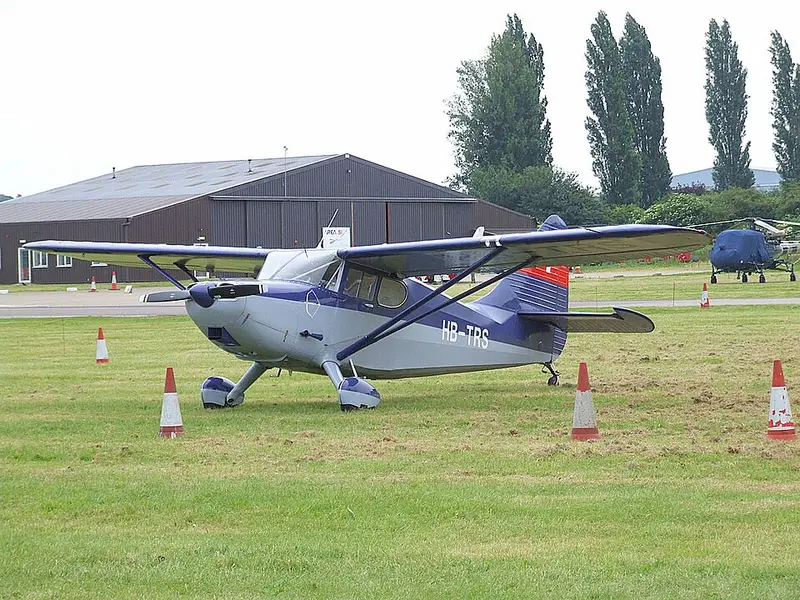
.jpg)
Did you know?
A postwar taildragger that kept its prewar roots: a welded steel-tube, fabric-covered fuselage with wood-and-aluminum wings, unlike its all-metal contemporaries.
Specifications
| Length | 8 m (26 ft) |
|---|---|
| Wingspan | 11 m (36 ft) |
| Height | 2.4 m (8 ft) |
| Maximum passengers | 3 |
| Crew | 1 |
| Maximum take-off weight | 1.1 t |
| Range | 600 NM (1,111 km) |
| Maximum speed | 125 kt (232 km/h) |
| Service ceiling | 16,000 ft (4,877 m) |
| Optimum ceiling | 10,000 ft (3,048 m) |
| Rate of climb | 770 ft/min (3.9 m/s) |
| Take-off distance | 420 m (1,378 ft) |
| Landing distance | 400 m (1,312 ft) |
| Fuel capacity | 190 l |
| Engines | 1x Franklin 6A4-165 |
| Units built | 1,250 |
Curated by CatchFlights from manufacturer documents, ICAO Doc 8643 and reference works; values are left out where no source could confirm them. Sources are listed on our credits page.
In CatchFlights
In CatchFlights the Stinson 108 Voyager starts as a Rare catch. The tier is an editorial judgement of how special a sighting of this type is. The more often you catch it, the closer it moves to Common for you.
A catch counts for the manufacturer Stinson, the 108 Voyager family and the model in your collection, and the daily Type Rating quiz asks about the types of each family.
Catch it yourself.CatchFlights shows the aircraft flying near you on a radar, so a type like this one is only a catch away when it passes overhead. Explore CatchFlights.
Browse all aircraft types, or learn to tell Airbus from Boeing.