
Socata TBM-700
Developed jointly by Mooney and France's SOCATA from the Mooney 301 prototype, the TBM 700 first flew in 1988 and became, on certification in 1990, the world's first pressurized single-engine turboprop in production, a category now called the personal turboprop. Its Pratt & Whitney PT6A-64 engine and single-pilot cockpit let it fly at airline-like speeds and altitudes without the crew costs of a twin business jet, a combination that founded an entire market segment later followed by Piper, Daher and others. The name blends its birthplace, Tarbes, with Mooney and its 700-horsepower engine rating.
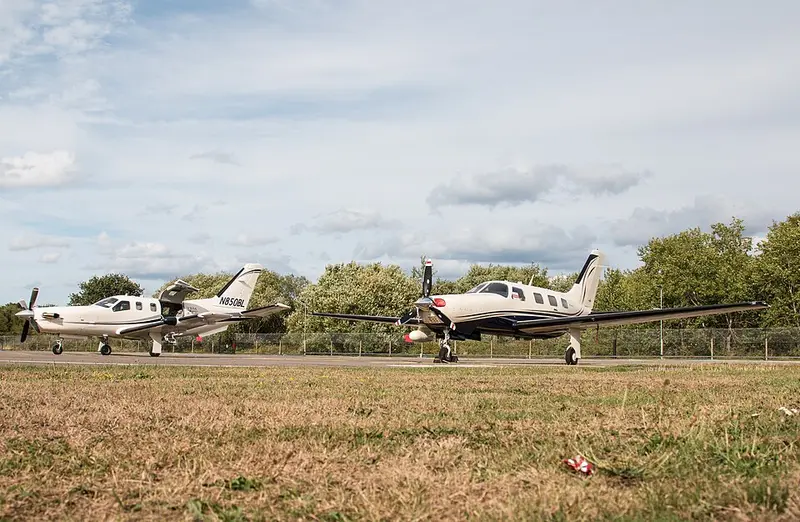
.jpg)
Did you know?
The TBM 700 was the first pressurized single-engine turboprop certified for production, founding the personal turboprop category.
Specifications
| Length | 10.4 m (34 ft) |
|---|---|
| Wingspan | 12.7 m (42 ft) |
| Height | 4.4 m (14 ft) |
| Maximum passengers | 5 |
| Persons on board | 7 |
| Maximum take-off weight | 2.9 t |
| Range | 1,355 NM (2,509 km) |
| Maximum speed | 300 kt (556 km/h) |
| Stall speed | 61 kt (113 km/h) |
| Service ceiling | 25,000 ft (7,620 m) |
| Optimum ceiling | 25,000 ft (7,620 m) |
| Rate of climb | 1,650 ft/min (8.4 m/s) |
| Take-off distance | 650 m (2,133 ft) |
| Landing distance | 620 m (2,034 ft) |
| Fuel capacity | 1,124 l |
| Engines | Pratt & Whitney Canada PT6A-64 |
Curated by CatchFlights from manufacturer documents, ICAO Doc 8643 and reference works; values are left out where no source could confirm them. Sources are listed on our credits page.
In CatchFlights
In CatchFlights the Socata TBM-700 starts as a Uncommon catch. The tier is an editorial judgement of how special a sighting of this type is. The more often you catch it, the closer it moves to Common for you.
A catch counts for the manufacturer Socata, the TBM-700 family and the model in your collection, and the daily Type Rating quiz asks about the types of each family.
Catch it yourself.CatchFlights shows the aircraft flying near you on a radar, so a type like this one is only a catch away when it passes overhead. Explore CatchFlights.
Browse all aircraft types, or learn to tell Airbus from Boeing.