
Piper PA-42-1000 Cheyenne 400
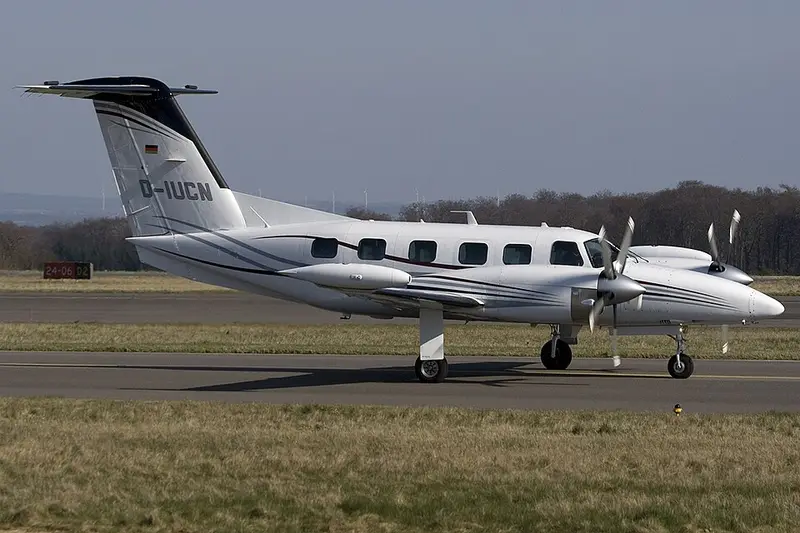
The Piper PA-42 Cheyenne 400 was the largest, fastest, and most powerful member of Piper's Cheyenne twin-turboprop family, fitted with high-revving Garrett engines that gave it near-jet cruise speeds. Its pressurised cabin and strong climb performance let it compete for some of the same missions as light jets of its era, at a turboprop's lower fuel cost. Its distinctive high-pitched engine sound, a hallmark of the Garrett TPE331, set it apart from the Pratt & Whitney PT6-powered turboprops common elsewhere in the Cheyenne lineup. Comparatively few were built, making it a rare sight next to Piper's smaller, more common Cheyennes.

Did you know?
Garrett TPE331 engines, like the Cheyenne 400's, are notoriously sensitive to starting technique — a mishandled start can ruin one within seconds.
Specifications
| Length | 10.3 m (34 ft) |
|---|---|
| Wingspan | 14 m (46 ft) |
| Height | 4.3 m (14 ft) |
| Maximum passengers | 8 |
| Persons on board | 11 |
| Maximum take-off weight | 5.4 t |
| Range | 2,100 NM (3,889 km) |
| Maximum speed | 330 kt (611 km/h) |
| Stall speed | 89 kt (165 km/h) |
| Service ceiling | 41,000 ft (12,497 m) |
| Optimum ceiling | 35,000 ft (10,668 m) |
| Rate of climb | 3,242 ft/min (16.5 m/s) |
| Take-off distance | 588 m (1,929 ft) |
| Landing distance | 700 m (2,297 ft) |
| Fuel capacity | 1,520 l |
| Engines | 2x Garrett TPE331-14 |
| Units built | 44 |
Curated by CatchFlights from manufacturer documents, ICAO Doc 8643 and reference works; values are left out where no source could confirm them. Sources are listed on our credits page.
In CatchFlights
In CatchFlights the Piper PA-42-1000 Cheyenne 400 starts as a Rare catch. The tier is an editorial judgement of how special a sighting of this type is. The more often you catch it, the closer it moves to Common for you.
A catch counts for the manufacturer Piper, the PA-42-1000 Cheyenne 400 family and the model in your collection, and the daily Type Rating quiz asks about the types of each family.
Catch it yourself.CatchFlights shows the aircraft flying near you on a radar, so a type like this one is only a catch away when it passes overhead. Explore CatchFlights.
Browse all aircraft types, or learn to tell Airbus from Boeing.