
Percival P-28 Proctor
The Percival P.28 Proctor was a wartime British radio trainer and communications aircraft developed from the civil Vega Gull touring monoplane, first flying in October 1939 just weeks after Britain entered the Second World War. Three-seat Mk I and Mk III variants trained radio operators, while the enlarged four-seat Mk IV added extra fuselage space for equipment and personnel. Over 1,140 were built in total, many assembled by F. Hills & Sons at Barton Aerodrome. Postwar, surplus early-mark Proctors found a second life on civil registers worldwide, while RAF Mk IVs served on until 1955.
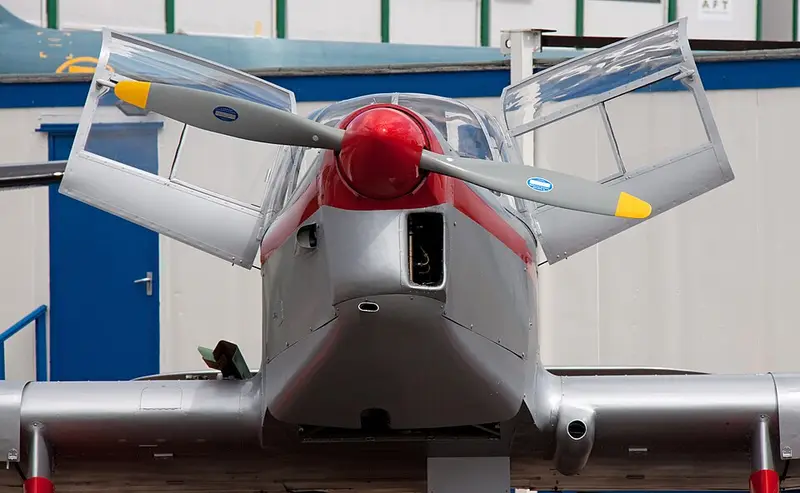
.jpg)
Did you know?
A wartime British radio-operator trainer developed from the civil Vega Gull, with an enlarged four-seat Mk IV for equipment and personnel.
Specifications
| Length | 8.5 m (28 ft) |
|---|---|
| Wingspan | 12 m (39 ft) |
| Height | 2.2 m (7 ft) |
| Persons on board | 4 |
| Maximum take-off weight | 1.5 t |
| Range | 500 NM (926 km) |
| Service ceiling | 14,000 ft (4,267 m) |
| Optimum ceiling | 10,000 ft (3,048 m) |
| Rate of climb | 680 ft/min (3.5 m/s) |
Curated by CatchFlights from manufacturer documents, ICAO Doc 8643 and reference works; values are left out where no source could confirm them. Sources are listed on our credits page.
In CatchFlights
In CatchFlights the Percival P-28 Proctor starts as a Rare catch. The tier is an editorial judgement of how special a sighting of this type is. The more often you catch it, the closer it moves to Common for you.
A catch counts for the manufacturer Percival, the P-28 Proctor family and the model in your collection, and the daily Type Rating quiz asks about the types of each family.
Catch it yourself.CatchFlights shows the aircraft flying near you on a radar, so a type like this one is only a catch away when it passes overhead. Explore CatchFlights.
Browse all aircraft types, or learn to tell Airbus from Boeing.