
Partenavia P-68
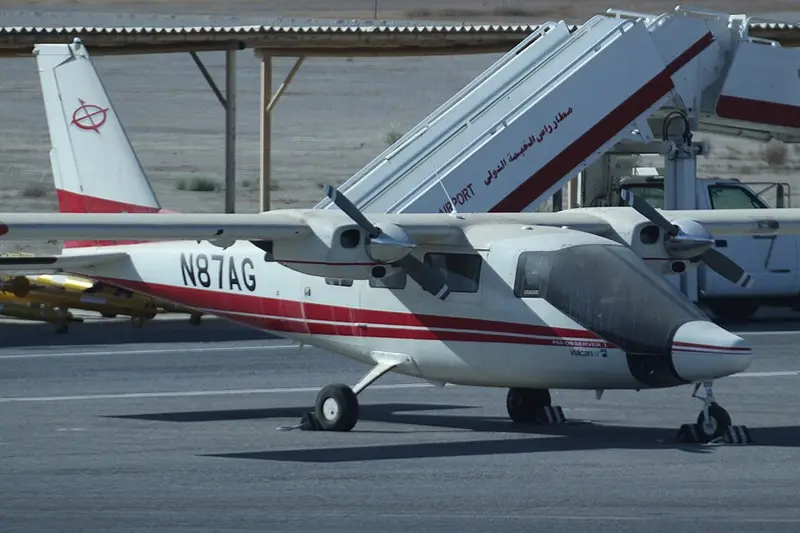
The Partenavia P.68 is a twin-engine light utility aircraft built in Italy, notable for its relatively unobstructed forward cockpit visibility thanks to engines mounted further out along the wing than on many comparable twins. That layout gives pilots and front passengers a clearer view than typical light twins with engines closer to the fuselage. It's commonly used for aerial survey, photography, and pilot training, roles that benefit from that improved visibility. Later versions have been updated with modern avionics while keeping the same basic airframe.
.jpg)
Did you know?
The Italian-built P.68 mounts its two engines further out on the wing than most light twins, giving pilots a clearer forward view.
Specifications
| Length | 9.6 m (31 ft) |
|---|---|
| Wingspan | 12 m (39 ft) |
| Height | 3.4 m (11 ft) |
| Maximum passengers | 6 |
| Persons on board | 8 |
| Maximum take-off weight | 1.9 t |
| Range | 745 NM (1,380 km) |
| Maximum speed | 165 kt (306 km/h) |
| Stall speed | 57 kt (106 km/h) |
| Service ceiling | 18,000 ft (5,486 m) |
| Optimum ceiling | 13,000 ft (3,962 m) |
| Rate of climb | 1,181 ft/min (6 m/s) |
| Take-off distance | 400 m (1,312 ft) |
| Landing distance | 430 m (1,411 ft) |
| Fuel capacity | 410 l |
| Engines | 2x Lycoming IO-360-A1B6 |
Curated by CatchFlights from manufacturer documents, ICAO Doc 8643 and reference works; values are left out where no source could confirm them. Sources are listed on our credits page.
In CatchFlights
In CatchFlights the Partenavia P-68 starts as a Uncommon catch. The tier is an editorial judgement of how special a sighting of this type is. The more often you catch it, the closer it moves to Common for you.
A catch counts for the manufacturer Partenavia, the P-68 family and the model in your collection, and the daily Type Rating quiz asks about the types of each family.
Catch it yourself.CatchFlights shows the aircraft flying near you on a radar, so a type like this one is only a catch away when it passes overhead. Explore CatchFlights.
Browse all aircraft types, or learn to tell Airbus from Boeing.