
Mil Mi-38
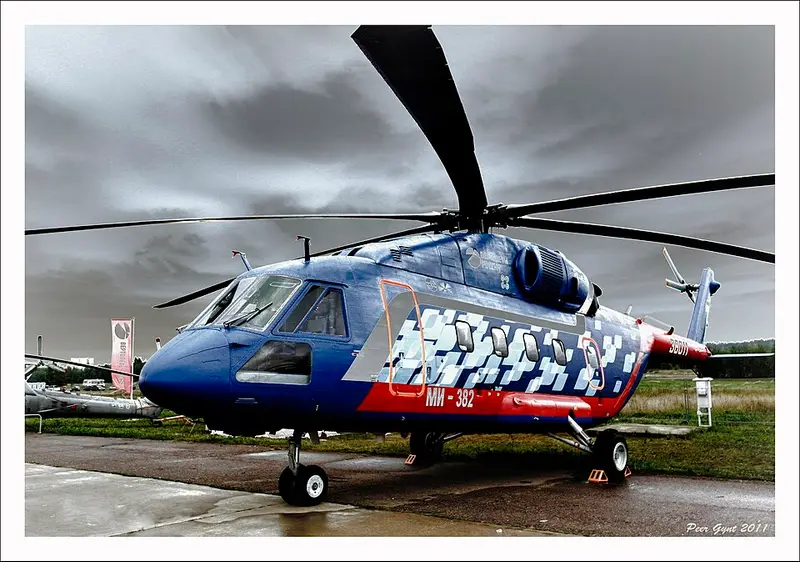
The Mil Mi-38 was developed as a modern successor to the ubiquitous Mi-8/17 family, combining a new composite rotor system and a spacious, pressurised-cabin-capable fuselage with a genuinely modern digital glass cockpit. International sanctions and a shifting mix of Russian and Western partners repeatedly disrupted its long, difficult development, delaying certification for years beyond original plans. It's intended to serve both civilian offshore and VIP transport roles and, in a militarised form, army transport duty. Production has remained limited so far, and the far more numerous Mi-8/17 family continues to handle most of the missions the Mi-38 was meant to eventually replace.

Did you know?
A rounded, heavily glazed nose sets the Mi-38 apart at a glance from the flatter, boxier nose of the older Mi-8/17 it succeeds.
Specifications
| Length | 19.7 m (65 ft) |
|---|---|
| Height | 5.5 m (18 ft) |
| Rotor diameter | 21.1 m (69 ft) |
| Maximum passengers | 30 |
| Persons on board | 32 |
| Maximum take-off weight | 15.6 t |
| Range | 300 NM (556 km) |
| Service ceiling | 15,750 ft (4,801 m) |
| Optimum ceiling | 17,000 ft (5,182 m) |
| Fuel capacity | 3,000 l |
| Engines | 2x Klimov TV7-117V |
| Units built | 16 |
Curated by CatchFlights from manufacturer documents, ICAO Doc 8643 and reference works; values are left out where no source could confirm them. Sources are listed on our credits page.
In CatchFlights
In CatchFlights the Mil Mi-38 starts as a Legendary catch. The tier is an editorial judgement of how special a sighting of this type is. The more often you catch it, the closer it moves to Common for you. The first catch of a legendary type pays a bonus of its own.
A catch counts for the manufacturer Mil, the Mi-38 family and the model in your collection, and the daily Type Rating quiz asks about the types of each family.
Catch it yourself.CatchFlights shows the aircraft flying near you on a radar, so a type like this one is only a catch away when it passes overhead. Explore CatchFlights.
Browse all aircraft types, or learn to tell Airbus from Boeing.