
Lockheed L-1011 TriStar
The Lockheed L-1011 TriStar was a widebody trijet, competing directly with the similarly-configured McDonnell Douglas DC-10 in the 1970s. It was known for its advanced autopilot, capable of fully automatic landings in very poor visibility, well ahead of its time. Commercially, it struggled against the DC-10 and never achieved the sales Lockheed had hoped for, partly because of production delays tied to its British-built Rolls-Royce engines. It was Lockheed's last commercial airliner, and the company left the passenger aircraft business after the program ended.
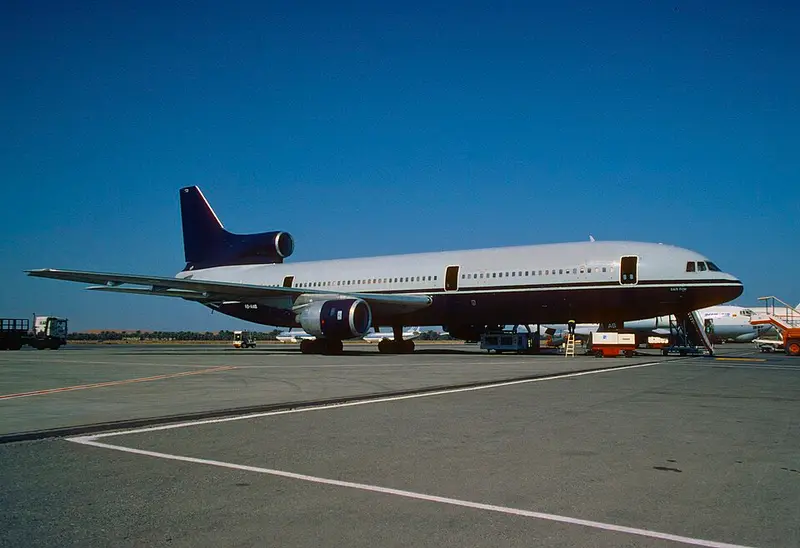
.jpg)
Did you know?
The L-1011 TriStar's advanced autopilot could perform fully automatic landings in poor visibility, years ahead of its 1970s rivals.
Specifications
| Length | 54.2 m (178 ft) |
|---|---|
| Wingspan | 50.1 m (164 ft) |
| Height | 16.8 m (55 ft) |
| Maximum passengers | 400 |
| Persons on board | 250-350 |
| Maximum take-off weight | 211 t |
| Range | 4,600 NM (8,519 km) |
| Maximum speed | 504 kt (933 km/h) |
| Stall speed | 125 kt (232 km/h) |
| Service ceiling | 42,000 ft (12,802 m) |
| Optimum ceiling | 37,000 ft (11,278 m) |
| Rate of climb | 2,800 ft/min (14.2 m/s) |
| Take-off distance | 2,313 m (7,589 ft) |
| Landing distance | 2,073 m (6,801 ft) |
| Fuel capacity | 89,400 l |
| Engines | 3x RB211 |
| Units built | 250 |
Curated by CatchFlights from manufacturer documents, ICAO Doc 8643 and reference works; values are left out where no source could confirm them. Sources are listed on our credits page.
In CatchFlights
In CatchFlights the Lockheed L-1011 TriStar starts as a Legendary catch. The tier is an editorial judgement of how special a sighting of this type is. The more often you catch it, the closer it moves to Common for you. The first catch of a legendary type pays a bonus of its own.
A catch counts for the manufacturer Lockheed, the L-1011 family and the model in your collection, and the daily Type Rating quiz asks about the types of each family.
Catch it yourself.CatchFlights shows the aircraft flying near you on a radar, so a type like this one is only a catch away when it passes overhead. Explore CatchFlights.
Browse all aircraft types, or learn to tell Airbus from Boeing.