
Hawker Hind
The Hawker Hind was Sydney Camm's light-bomber refinement of the earlier Hawker Hart, entering RAF service in November 1935 with a supercharged Rolls-Royce Kestrel giving it a useful speed advantage over other biplanes of the day. It equipped around twenty RAF bomber squadrons and became the type on which most newly trained bomber pilots of the late 1930s learned their trade, before monoplanes pushed it out of front-line units ahead of the Second World War. Afghanistan's Royal Air Force, an unusual overseas customer, received Hinds from 1938 and reportedly flew them into the 1950s, decades after the RAF itself had moved on.
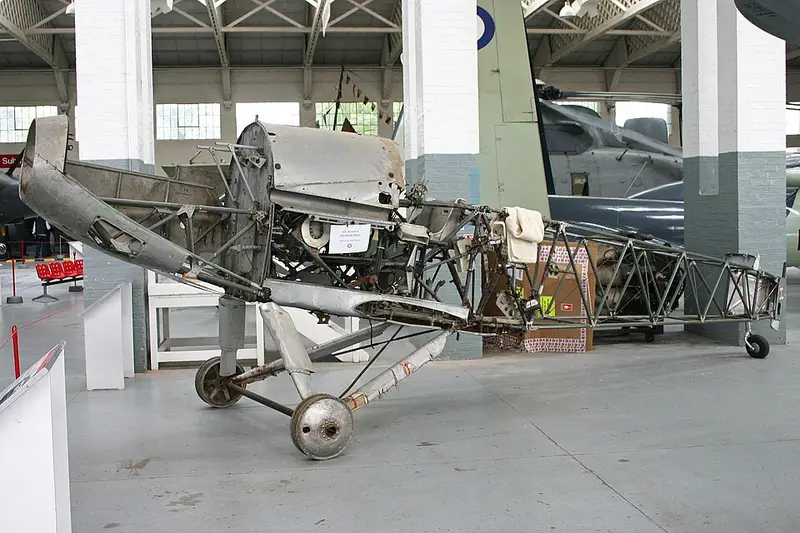
_(G-CBLK)_(6839680204).jpg)
Did you know?
A refinement of the Hawker Hart, the Hind was a fast biplane light bomber on which most late-1930s RAF bomber crews first learned their trade.
Specifications
| Length | 9 m (30 ft) |
|---|---|
| Wingspan | 11.3 m (37 ft) |
| Height | 3.2 m (10 ft) |
| Persons on board | 2 |
| Maximum take-off weight | 2.4 t |
| Range | 430 NM (796 km) |
| Stall speed | 39 kt (72 km/h) |
| Service ceiling | 26,500 ft (8,077 m) |
| Units built | 528 |
Curated by CatchFlights from manufacturer documents, ICAO Doc 8643 and reference works; values are left out where no source could confirm them. Sources are listed on our credits page.
In CatchFlights
In CatchFlights the Hawker Hind starts as a Rare catch. The tier is an editorial judgement of how special a sighting of this type is. The more often you catch it, the closer it moves to Common for you.
A catch counts for the manufacturer Hawker, the Hind family and the model in your collection, and the daily Type Rating quiz asks about the types of each family.
Catch it yourself.CatchFlights shows the aircraft flying near you on a radar, so a type like this one is only a catch away when it passes overhead. Explore CatchFlights.
Browse all aircraft types, or learn to tell Airbus from Boeing.