
Grumman F8F Bearcat
The Grumman F8F Bearcat was the last piston-engined fighter the US Navy put into frontline service, designed from 1943 around one goal: wrap the biggest engine Grumman could find in the smallest, lightest airframe possible for unmatched climb and acceleration. It first flew on 21 August 1944, too late for Second World War combat, but its sea-level climb rate of roughly 4,500 feet per minute made it the fastest-climbing production piston fighter of its era. An unmodified F8F-1 set a time-to-climb record to 10,000 feet in 1946 that stood for a decade until jets broke it. Bearcats later fought with France in Indochina and remain popular air-racing aircraft today.
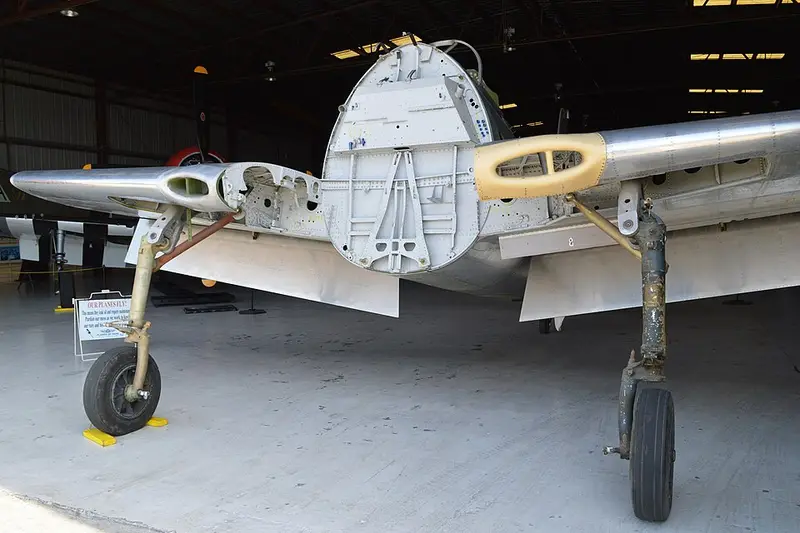
_(26655838476).jpg)
Did you know?
Look for a compact fuselage around a huge engine: Grumman wrapped the largest one it could find into the smallest, lightest airframe.
Specifications
| Length | 8.6 m (28 ft) |
|---|---|
| Wingspan | 10.9 m (36 ft) |
| Height | 4.2 m (14 ft) |
| Persons on board | 1 |
| Maximum take-off weight | 5.8 t |
| Range | 960 NM (1,778 km) |
| Service ceiling | 39,000 ft (11,887 m) |
| Optimum ceiling | 33,000 ft (10,058 m) |
| Rate of climb | 5,600 ft/min (28.4 m/s) |
| Fuel capacity | 700 l |
Curated by CatchFlights from manufacturer documents, ICAO Doc 8643 and reference works; values are left out where no source could confirm them. Sources are listed on our credits page.
In CatchFlights
In CatchFlights the Grumman F8F Bearcat starts as a Rare catch. The tier is an editorial judgement of how special a sighting of this type is. The more often you catch it, the closer it moves to Common for you.
A catch counts for the manufacturer Grumman, the F8F Bearcat family and the model in your collection, and the daily Type Rating quiz asks about the types of each family.
Catch it yourself.CatchFlights shows the aircraft flying near you on a radar, so a type like this one is only a catch away when it passes overhead. Explore CatchFlights.
Browse all aircraft types, or learn to tell Airbus from Boeing.