
Fairey Firefly
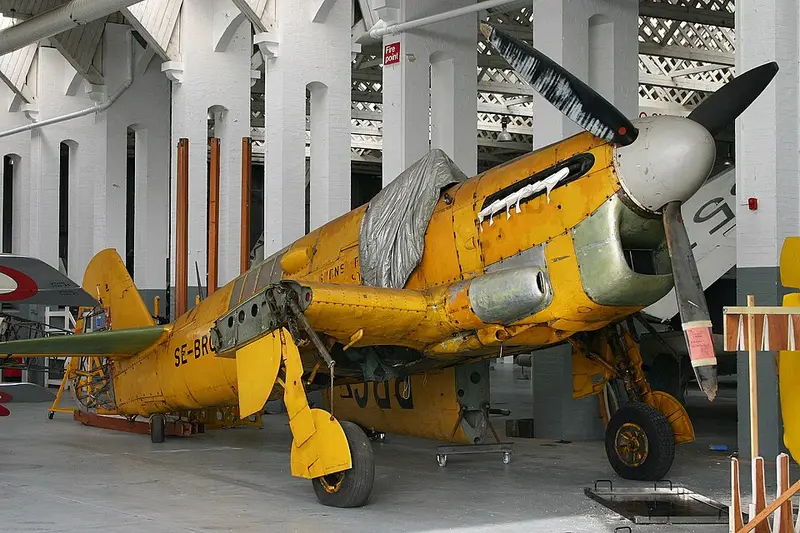
The Fairey Firefly was a two-seat, folding-wing naval fighter that entered Fleet Air Arm service in 1943, its Rolls-Royce Griffon engine giving it far more punch than earlier carrier fighters. Unlike single-seat contemporaries, it carried a dedicated observer to operate radar and navigate, a layout that let later marks excel at anti-submarine and strike work rather than pure air combat. British and Australian Fireflies flew extensive ground-attack sorties from carriers off Korea between 1950 and 1953, alongside the faster Hawker Sea Fury. It remained in front-line Fleet Air Arm service until the mid-1950s, when the turboprop Fairey Gannet took over its role.
.jpg)
Did you know?
Folding wings and a second seat for a radar observer set the Firefly apart from the single-seat carrier fighters of its day.
Specifications
| Length | 11.4 m (37 ft) |
|---|---|
| Wingspan | 13.5 m (44 ft) |
| Height | 4.1 m (13 ft) |
| Persons on board | 2 |
| Maximum take-off weight | 6.6 t |
| Range | 510 NM (945 km) |
| Service ceiling | 29,000 ft (8,839 m) |
| Fuel capacity | 810 l |
| Units built | 1,702 |
Curated by CatchFlights from manufacturer documents, ICAO Doc 8643 and reference works; values are left out where no source could confirm them. Sources are listed on our credits page.
In CatchFlights
In CatchFlights the Fairey Firefly starts as a Rare catch. The tier is an editorial judgement of how special a sighting of this type is. The more often you catch it, the closer it moves to Common for you.
A catch counts for the manufacturer Fairey, the Firefly family and the model in your collection, and the daily Type Rating quiz asks about the types of each family.
Catch it yourself.CatchFlights shows the aircraft flying near you on a radar, so a type like this one is only a catch away when it passes overhead. Explore CatchFlights.
Browse all aircraft types, or learn to tell Airbus from Boeing.