
Dornier 228
The Dornier 228 is a twin-turboprop utility and regional aircraft, notable for its unusual 'TNT' wing — a new laminar-flow wing design intended to reduce drag and improve fuel efficiency compared with more conventional shapes of its era. Its rugged, fixed landing gear and STOL capability suit short regional routes and utility work from less-developed airstrips. Originally a German design, production later moved to India before eventually returning to Germany under new ownership. It remains in production today, one of relatively few Western turboprops of its size still being actively built.
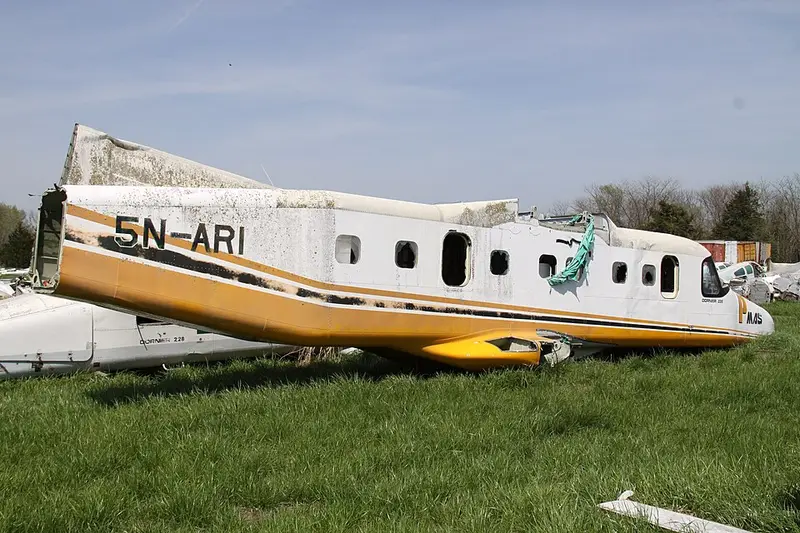
.jpg)
Did you know?
The Dornier 228 is recognisable by its boxy, unswept 'TNT' wing, a distinctive straight-edged shape unlike other turboprops' swept wings.
Specifications
| Length | 16.6 m (54 ft) |
|---|---|
| Wingspan | 17 m (56 ft) |
| Height | 4.9 m (16 ft) |
| Maximum passengers | 19 |
| Persons on board | 19 |
| Maximum take-off weight | 6.4 t |
| Range | 570 NM (1,056 km) |
| Maximum speed | 223 kt (413 km/h) |
| Stall speed | 78 kt (144 km/h) |
| Service ceiling | 25,000 ft (7,620 m) |
| Optimum ceiling | 25,000 ft (7,620 m) |
| Rate of climb | 1,870 ft/min (9.5 m/s) |
| Take-off distance | 671 m (2,201 ft) |
| Landing distance | 402 m (1,319 ft) |
| Fuel capacity | 2,400 l |
| Engines | 2x Garrett TPE331-5 |
| Units built | 370 |
Curated by CatchFlights from manufacturer documents, ICAO Doc 8643 and reference works; values are left out where no source could confirm them. Sources are listed on our credits page.
In CatchFlights
In CatchFlights the Dornier 228 starts as a Uncommon catch. The tier is an editorial judgement of how special a sighting of this type is. The more often you catch it, the closer it moves to Common for you.
A catch counts for the manufacturer Dornier, the 228 family and the model in your collection, and the daily Type Rating quiz asks about the types of each family.
Catch it yourself.CatchFlights shows the aircraft flying near you on a radar, so a type like this one is only a catch away when it passes overhead. Explore CatchFlights.
Browse all aircraft types, or learn to tell Airbus from Boeing.