
Dornier 128-2 Skyservant
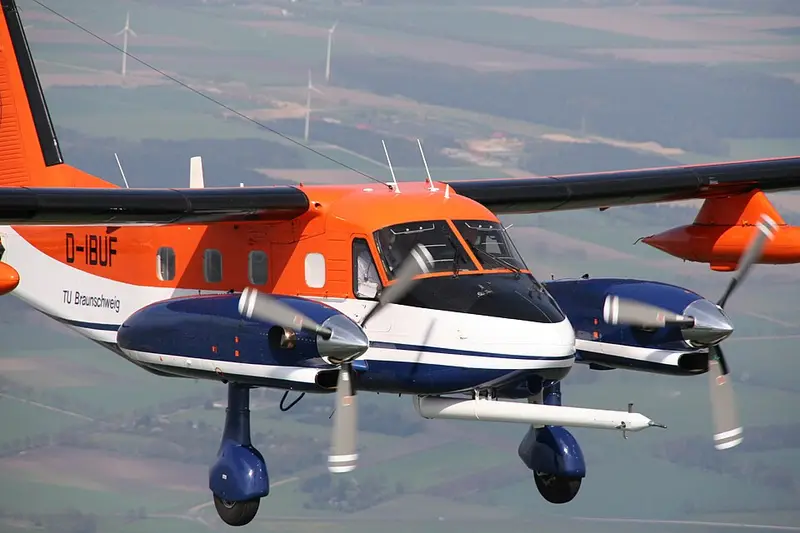
Developed from the single-engine Do 27 and first flown on 23 February 1966, the Dornier Do 28D Skyservant is instantly recognisable for mounting its twin Lycoming engines not on the wing itself but on short stub-wing pylons jutting from the lower fuselage, well below the high-set main wing. That unusual placement, shared with the faired main gear legs, kept the wing clean for STOL performance while easing access to the 380 hp IGSO-540 engines for maintenance. The D-2 variant, with 172 built, was the most numerous Skyservant version and equipped the German Air Force and Marineflieger as a light utility transport carrying up to fourteen passengers behind a two-person cockpit crew.

Did you know?
Spot the Skyservant by its twin Lycomings hanging on stub wings far below the high main wing, a layout built for clean STOL.
Specifications
| Length | 11.4 m (37 ft) |
|---|---|
| Wingspan | 15.5 m (51 ft) |
| Height | 3.9 m (13 ft) |
| Persons on board | 12 |
| Maximum take-off weight | 3.8 t |
| Range | 560 NM (1,037 km) |
| Service ceiling | 25,000 ft (7,620 m) |
| Optimum ceiling | 18,000 ft (5,486 m) |
| Rate of climb | 1,160 ft/min (5.9 m/s) |
| Take-off distance | 560 m (1,837 ft) |
| Landing distance | 390 m (1,280 ft) |
| Fuel capacity | 620 l |
Curated by CatchFlights from manufacturer documents, ICAO Doc 8643 and reference works; values are left out where no source could confirm them. Sources are listed on our credits page.
In CatchFlights
In CatchFlights the Dornier 128-2 Skyservant starts as a Rare catch. The tier is an editorial judgement of how special a sighting of this type is. The more often you catch it, the closer it moves to Common for you.
A catch counts for the manufacturer Dornier, the 128-2 Skyservant family and the model in your collection, and the daily Type Rating quiz asks about the types of each family.
Catch it yourself.CatchFlights shows the aircraft flying near you on a radar, so a type like this one is only a catch away when it passes overhead. Explore CatchFlights.
Browse all aircraft types, or learn to tell Airbus from Boeing.