
De Havilland Canada DHC-4 Turbo Caribou
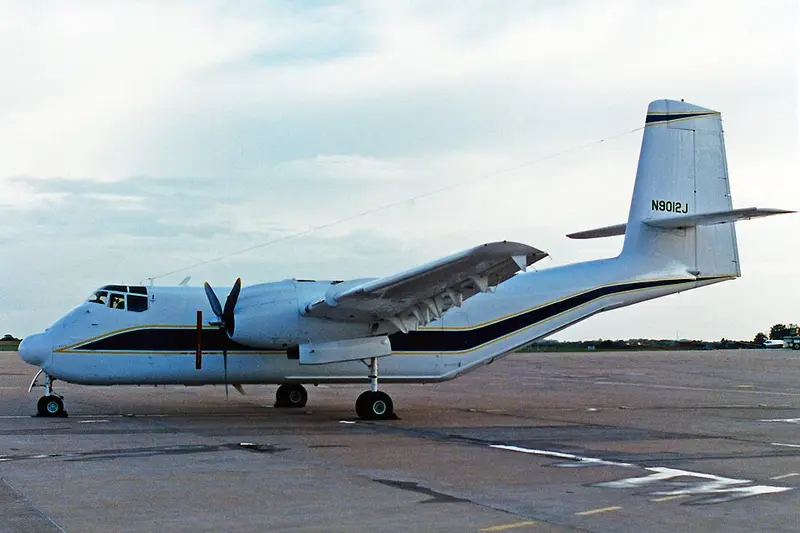
The de Havilland Canada DHC-4A Turbo Caribou was a turboprop conversion of the piston-engined Caribou tactical transport. The new engines improved reliability and takeoff performance while preserving the aircraft’s exceptional short-field capability. Only a handful were converted, so the Turbo Caribou is much rarer than the standard DHC-4. Its high wing and rear ramp remained ideal for delivering cargo and troops into rough, confined airstrips.
.jpg)
Did you know?
From outside, only the engine nacelles distinguish the Turbo Caribou from a standard piston DHC-4 — the fuselage, wing, and ramp are unchanged.
Specifications
| Length | 22.1 m (73 ft) |
|---|---|
| Wingspan | 29.2 m (96 ft) |
| Height | 9.7 m (32 ft) |
| Maximum passengers | 32 |
| Persons on board | 30 |
| Crew | 3 |
| Range | 1,200 NM (2,222 km) |
| Maximum speed | 250 kt (463 km/h) |
| Service ceiling | 25,000 ft (7,620 m) |
| Engines | 2x Pratt & Whitney Canada PT6A-67 |
Curated by CatchFlights from manufacturer documents, ICAO Doc 8643 and reference works; values are left out where no source could confirm them. Sources are listed on our credits page.
In CatchFlights
In CatchFlights the De Havilland Canada DHC-4 Turbo Caribou starts as a Legendary catch. The tier is an editorial judgement of how special a sighting of this type is. The more often you catch it, the closer it moves to Common for you. The first catch of a legendary type pays a bonus of its own.
A catch counts for the manufacturer De Havilland Canada, the DHC-4 Turbo Caribou family and the model in your collection, and the daily Type Rating quiz asks about the types of each family.
Catch it yourself.CatchFlights shows the aircraft flying near you on a radar, so a type like this one is only a catch away when it passes overhead. Explore CatchFlights.
Browse all aircraft types, or learn to tell Airbus from Boeing.