
Cessna 402 (turbine)
The turbine Cessna 402 is a specialist conversion of the familiar piston-powered commuter twin, replacing the original engines with turboprops. The change can improve climb performance and reliability, but it also turns a simple utility aircraft into a much rarer, individually modified machine. Standard 402s are common on short regional and cargo routes, so a turbine example stands out to knowledgeable spotters. Each conversion’s details vary, which is typical of supplemental type-certificate projects.
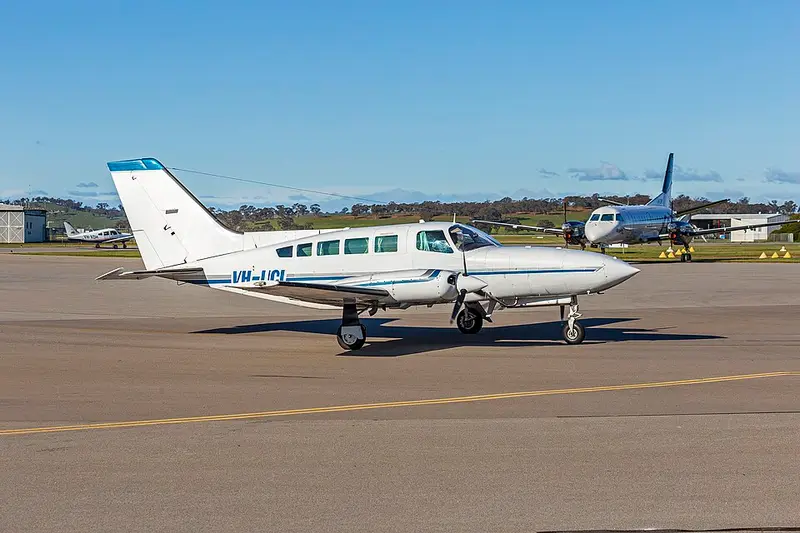
_Cessna_402C_Businessliner_taxiing_at_Wagga_Wagga_Airport_(1).jpg)
Did you know?
A turbine-converted Cessna 402 is a rare, individually modified aircraft — standard piston 402s are common, turbine ones are not.
Specifications
| Length | 11.1 m (36 ft) |
|---|---|
| Wingspan | 13.5 m (44 ft) |
| Height | 3.5 m (11 ft) |
| Maximum passengers | 9 |
| Persons on board | 10 |
| Crew | 2 |
| Maximum take-off weight | 1.7 t |
| Range | 1,000 NM (1,852 km) |
| Maximum speed | 250 kt (463 km/h) |
| Service ceiling | 20,000 ft (6,096 m) |
| Optimum ceiling | 22,000 ft (6,706 m) |
| Rate of climb | 1,600 ft/min (8.1 m/s) |
| Take-off distance | 500 m (1,640 ft) |
| Landing distance | 700 m (2,297 ft) |
| Fuel capacity | 400 l |
| Engines | 2x turboprop conversion engines |
Curated by CatchFlights from manufacturer documents, ICAO Doc 8643 and reference works; values are left out where no source could confirm them. Sources are listed on our credits page.
In CatchFlights
In CatchFlights the Cessna 402 (turbine) starts as a Rare catch. The tier is an editorial judgement of how special a sighting of this type is. The more often you catch it, the closer it moves to Common for you.
A catch counts for the manufacturer Cessna, the 402 (turbine) family and the model in your collection, and the daily Type Rating quiz asks about the types of each family.
Catch it yourself.CatchFlights shows the aircraft flying near you on a radar, so a type like this one is only a catch away when it passes overhead. Explore CatchFlights.
Browse all aircraft types, or learn to tell Airbus from Boeing.