
Boeing WC-135R
The Boeing WC-135 Constant Phoenix is nicknamed the ‘nuke sniffer’ because it collects air samples to detect radioactive debris from nuclear tests or accidents. It is derived from the C-135 family but carries specialised filtration and analysis equipment in place of a normal transport cabin. Its missions have included monitoring Chinese nuclear tests and collecting samples after the Fukushima accident. Only a handful have existed, so any sighting is notable even among military four-engine jets.
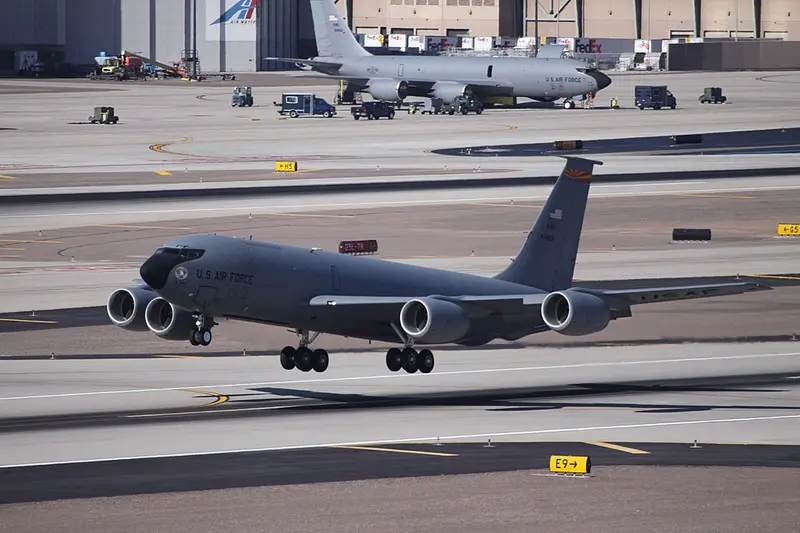
.jpg)
Did you know?
Nicknamed the 'nuke sniffer', the WC-135 Constant Phoenix collects airborne samples to detect radioactive debris from nuclear tests or accidents.
Specifications
| Length | 41.5 m (136 ft) |
|---|---|
| Wingspan | 39.9 m (131 ft) |
| Height | 12.7 m (42 ft) |
| Crew | 4 |
| Range | 3,400 NM (6,297 km) |
| Maximum speed | 580 kt (1,074 km/h) |
| Service ceiling | 50,000 ft (15,240 m) |
| Engines | 4x Pratt & Whitney TF33-P-9 |
Curated by CatchFlights from manufacturer documents, ICAO Doc 8643 and reference works; values are left out where no source could confirm them. Sources are listed on our credits page.
In CatchFlights
In CatchFlights the Boeing WC-135R starts as a Very rare catch. The tier is an editorial judgement of how special a sighting of this type is. The more often you catch it, the closer it moves to Common for you.
A catch counts for the manufacturer Boeing, the WC-135R family and the model in your collection, and the daily Type Rating quiz asks about the types of each family.
Catch it yourself.CatchFlights shows the aircraft flying near you on a radar, so a type like this one is only a catch away when it passes overhead. Explore CatchFlights.
Browse all aircraft types, or learn to tell Airbus from Boeing.