
Bac Lightning
The English Electric Lightning was built to climb as fast as possible against Soviet bombers, and its two engines were mounted one above the other rather than side by side. This unusual arrangement kept the fuselage narrow and helped create spectacular acceleration and climb performance. Lightnings could exceed Mach 2 and briefly climb almost vertically after takeoff. Their tiny wing and limited fuel capacity gave them short endurance, but few Cold War interceptors looked or performed so dramatically.
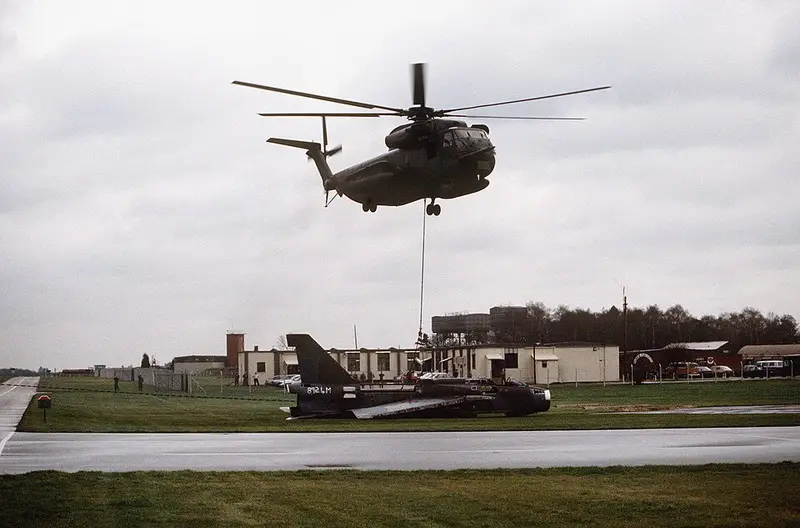

Did you know?
The English Electric Lightning stacked its two engines vertically rather than side by side, giving it a famously narrow fuselage.
Specifications
| Length | 16.8 m (55 ft) |
|---|---|
| Wingspan | 10.6 m (35 ft) |
| Height | 6 m (20 ft) |
| Persons on board | 1 |
| Crew | 1 |
| Maximum take-off weight | 18.9 t |
| Range | 800 NM (1,482 km) |
| Maximum speed | 1,270 kt (2,352 km/h) |
| Service ceiling | 60,000 ft (18,288 m) |
| Rate of climb | 20,000 ft/min (101.6 m/s) |
| Fuel capacity | 3,300 l |
| Engines | 2x Rolls-Royce Avon 301 |
| Units built | 337 |
Curated by CatchFlights from manufacturer documents, ICAO Doc 8643 and reference works; values are left out where no source could confirm them. Sources are listed on our credits page.
In CatchFlights
In CatchFlights the Bac Lightning starts as a Legendary catch. The tier is an editorial judgement of how special a sighting of this type is. The more often you catch it, the closer it moves to Common for you. The first catch of a legendary type pays a bonus of its own.
A catch counts for the manufacturer Bac, the Lightning family and the model in your collection, and the daily Type Rating quiz asks about the types of each family.
Catch it yourself.CatchFlights shows the aircraft flying near you on a radar, so a type like this one is only a catch away when it passes overhead. Explore CatchFlights.
Browse all aircraft types, or learn to tell Airbus from Boeing.