
Armstrong Whitworth Meteor
The Gloster Meteor was Britain’s first operational jet fighter and the Allies’ only jet to see combat during the Second World War. It was used mainly to intercept V-1 flying bombs, where its speed made it more suitable than piston fighters. The Meteor’s straight wing and twin engines in wing-root nacelles show the early stage of jet design. Later versions served for decades as fighters, night interceptors, reconnaissance aircraft, and testbeds across many air forces.
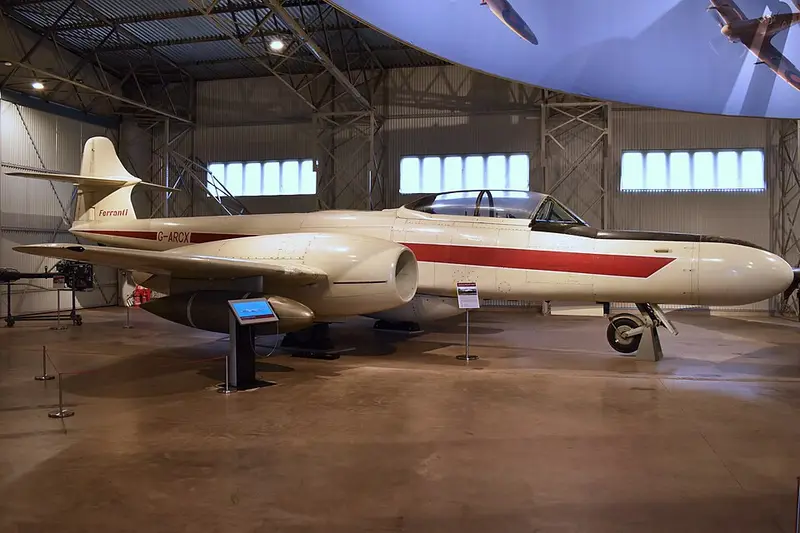
.jpg)
Did you know?
The Meteor was Britain's first operational jet fighter, used mainly to intercept V-1 flying bombs during the Second World War.
Specifications
| Length | 13.6 m (45 ft) |
|---|---|
| Wingspan | 11.3 m (37 ft) |
| Height | 4 m (13 ft) |
| Persons on board | 2 |
| Crew | 1 |
| Maximum take-off weight | 8 t |
| Range | 600 NM (1,111 km) |
| Maximum speed | 510 kt (945 km/h) |
| Service ceiling | 43,000 ft (13,106 m) |
| Rate of climb | 2,155 ft/min (10.9 m/s) |
| Fuel capacity | 1,480 l |
| Engines | 2x Rolls-Royce Derwent 8 |
| Units built | 3,886 |
Curated by CatchFlights from manufacturer documents, ICAO Doc 8643 and reference works; values are left out where no source could confirm them. Sources are listed on our credits page.
In CatchFlights
In CatchFlights the Armstrong Whitworth Meteor starts as a Legendary catch. The tier is an editorial judgement of how special a sighting of this type is. The more often you catch it, the closer it moves to Common for you. The first catch of a legendary type pays a bonus of its own.
A catch counts for the manufacturer Armstrong Whitworth, the Meteor family and the model in your collection, and the daily Type Rating quiz asks about the types of each family.
Catch it yourself.CatchFlights shows the aircraft flying near you on a radar, so a type like this one is only a catch away when it passes overhead. Explore CatchFlights.
Browse all aircraft types, or learn to tell Airbus from Boeing.